I. Production Process
The seamless steel pipe is made from solid round steel billets as the core raw material. It is formed through overall hot processing, with no splicing or welding throughout the process. The mainstream production processes include hot rolling, cold rolling, and cold drawing, among which the hot rolling process accounts for over 85% of the market output, suitable for the production of most conventional pipe materials.
The complete production process is as follows: heating of the round steel billet → center punching → tube reduction and thinning → sizing and shaping → cooling and straightening → non-destructive testing → finished product processing. After the raw material is heated to a high temperature to soften, it is processed from a solid steel billet into a hollow tube through the core rod punching, then undergoes multiple rolling processes to refine the tube wall and calibrate the tube diameter, and finally undergoes straightening, flaw detection, and rejection of defective products to ensure uniform overall performance and no structural defects of the pipe material. Cold rolling and cold drawing processes are mainly used for the production of small-diameter, high-precision, thin-walled seamless steel pipes, with better product size accuracy and surface finish.
II. Core Classification
The seamless steel pipe has a rich variety of categories, which can be classified by usage, material, process, wall thickness, etc. The commonly used classification methods in the industry are as follows:
1. By usage classification (mainstream classification)
- Structural seamless steel pipe: follows the GB/T 8162 standard, mainly for mechanical structure bearing, used for manufacturing mechanical components, supports, steel structure components, etc., focusing on mechanical strength and toughness.
- Fluid transportation seamless steel pipe: follows the GB/T 8163 standard, suitable for conventional fluid transportation such as water, oil, and gas, with excellent sealing and pressure resistance, commonly used in municipal and industrial fluid transportation.
- Boiler and high-pressure special seamless steel pipe: follows the GB 3087, GB 5310, etc. standards, with high-temperature resistance, high-pressure resistance, and anti-rust performance, specially designed for power station boilers, superheaters, high-pressure heat exchange equipment.
- Geological and petroleum special pipes: including petroleum drilling pipes, cracking pipes, pipeline pipes, etc., suitable for oilfield exploration, petrochemical corrosion, and high-pressure working conditions, with outstanding wear resistance and corrosion resistance.
2. By material classification
It is mainly divided into carbon steel seamless steel pipes, low-alloy seamless steel pipes, alloy steel seamless steel pipes, and stainless steel seamless steel pipes. Different materials are suitable for normal temperature, high temperature, low temperature, and corrosive conditions.
3. By wall thickness specification classification
It is divided into thin-walled seamless pipes and thick-walled seamless pipes. The pipe diameter range is extremely large, with the minimum diameter reaching 0.3mm and the maximum diameter reaching 650mm, capable of meeting the different usage requirements of precision components and large industrial equipment.
III. Core Performance Advantages
Compared with ordinary welded steel pipes, the core advantages of seamless steel pipes stem from the absence of weld seams and continuous uniform metal structure. The specific performance highlights are as follows:
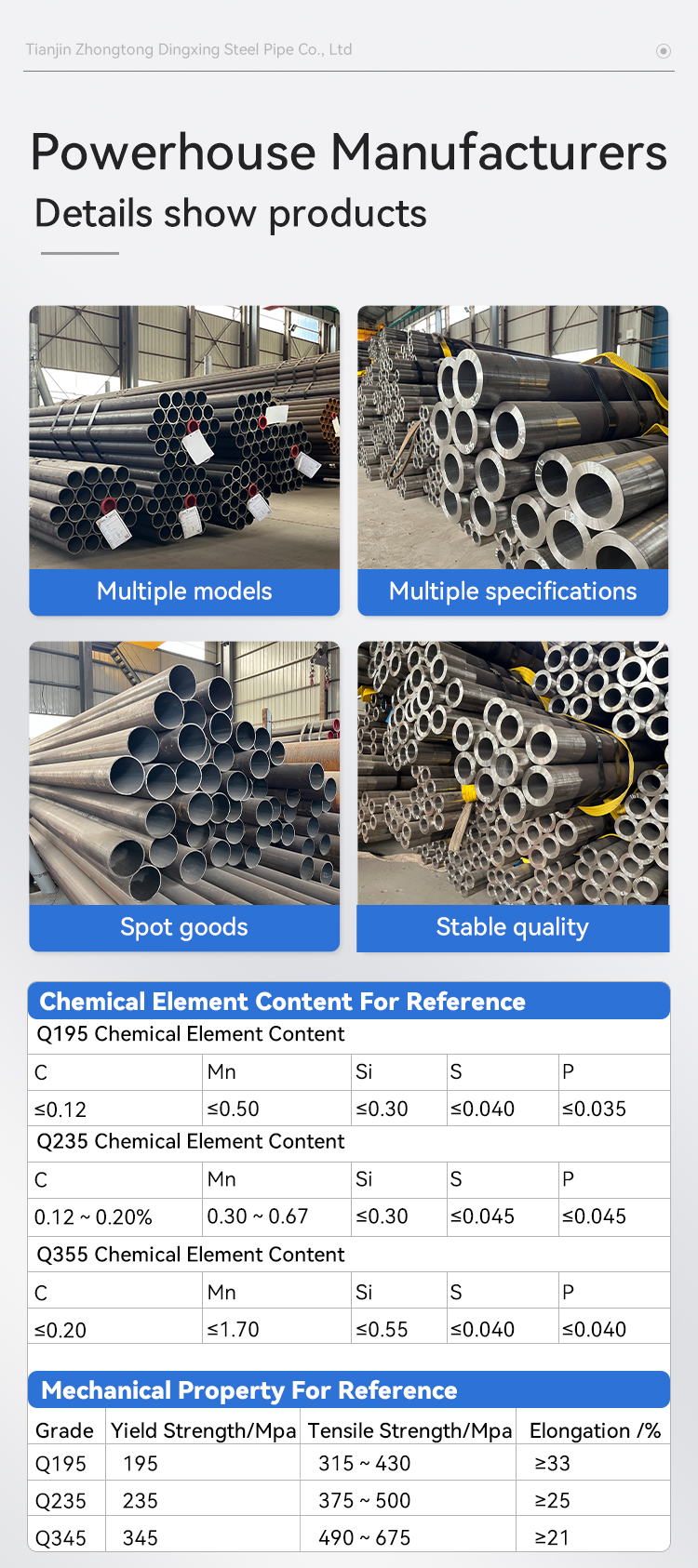
- Excellent mechanical properties: There are no weak areas in the weld seams, with stronger tensile, compressive, impact, and fatigue resistance, less prone to deformation and cracking, suitable for high-strength bearing and dynamic working conditions.
- Excellent pressure sealing performance: The entire pipe is formed as a whole without leakage hazards, capable of withstanding high-pressure fluid and gas transportation, eliminating the risk of weld seam leakage, suitable for high-pressure sealed working conditions.
- Resistance to temperature and corrosion: Seamless steel pipes made of alloy steel and stainless steel can withstand high and low temperatures and acid-base corrosion, suitable for extreme complex industrial environments, with longer service life.
- High dimensional accuracy: Cold-rolled and cold-drawn finished pipe materials have uniform wall thickness, standard roundness, and good surface finish, and can be directly used for precise mechanical assembly.
The only limitation is that the production cost of seamless steel pipes is higher than that of welded steel pipes, and its cost performance is more suitable for medium and high-end, high-safety requirements industrial scenarios. For ordinary low-pressure, low-load scenarios, welded steel pipes can be used as alternatives.
IV. Main Application Scenarios
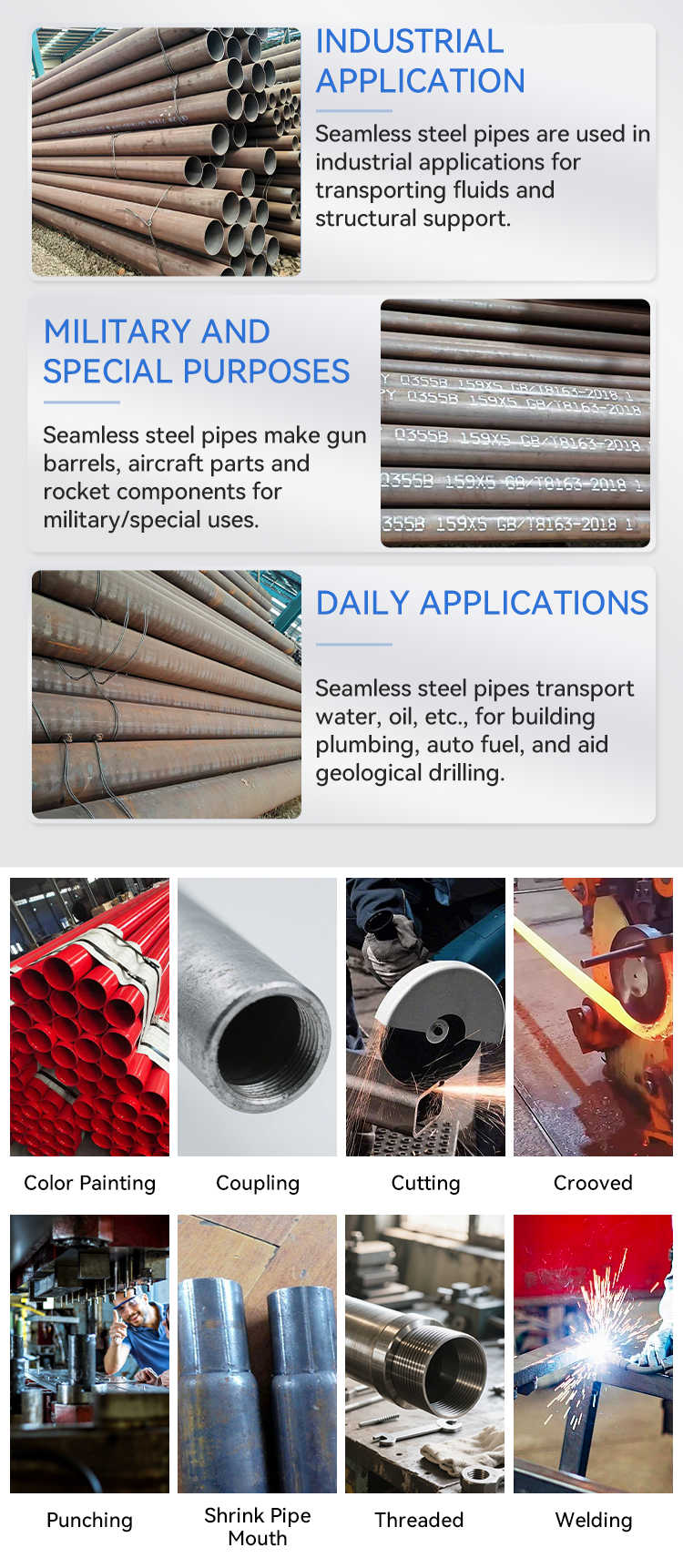
Seamless steel pipes are the "general foundation materials" of the industrial system, covering multiple core industries, and their application scenarios precisely correspond to their performance advantages:
- Energy and power industry: High-pressure boiler tubes, superheaters, header pipes for power plants, oil and gas transportation pipelines, oilfield drilling casing pipes.
- Petroleum and chemical industry: Chemical reaction equipment, heat exchanger pipes, acid-base corrosive medium transportation pipes, materials for petrochemical cracking equipment. - Mechanical manufacturing industry: hydraulic cylinders, bearing sleeves, machine tool accessories, semi-axles of automobiles, transmission shafts, structural components of construction machinery.
- Construction and municipal engineering: high-end steel structure supports, high-pressure fire protection pipelines, municipal high-pressure fluid transportation networks.
- Other high-end fields: shipbuilding, aerospace, precision instruments, special equipment, etc., in scenarios where strict requirements are imposed on the strength, sealing performance and safety of pipe materials.
|
tem
|
Description
|
|
Outer Diameter
|
10-660mm
|
|
Wall Thickness
|
2-50mm
|
|
Length
|
6-12m (fixed length) or as per client requirement
|
|
Standard
|
API 5L, ASTM A106, ASTM A53, GB/T 8163, GB/T 9948, etc.
|
|
Material
|
Gr.B, A106, 10#, 20#, 45#, X42-X70, etc.
|
|
Certificate
|
API 5L, ISO 9001:2008, SGS, BV, CCIC, etc.
|
|
Finish of pipe
|
Pickling and passivation; Hot dipped galvanized; Oil coating; Epoxy/FBE coating; Bare pipe
|
|
Pipe End
|
Plain end/ Bevel end; Threaded end with coupling; Socket end
|
|
Marking
|
As per client requirement or mill standard
|
|
Packing
|
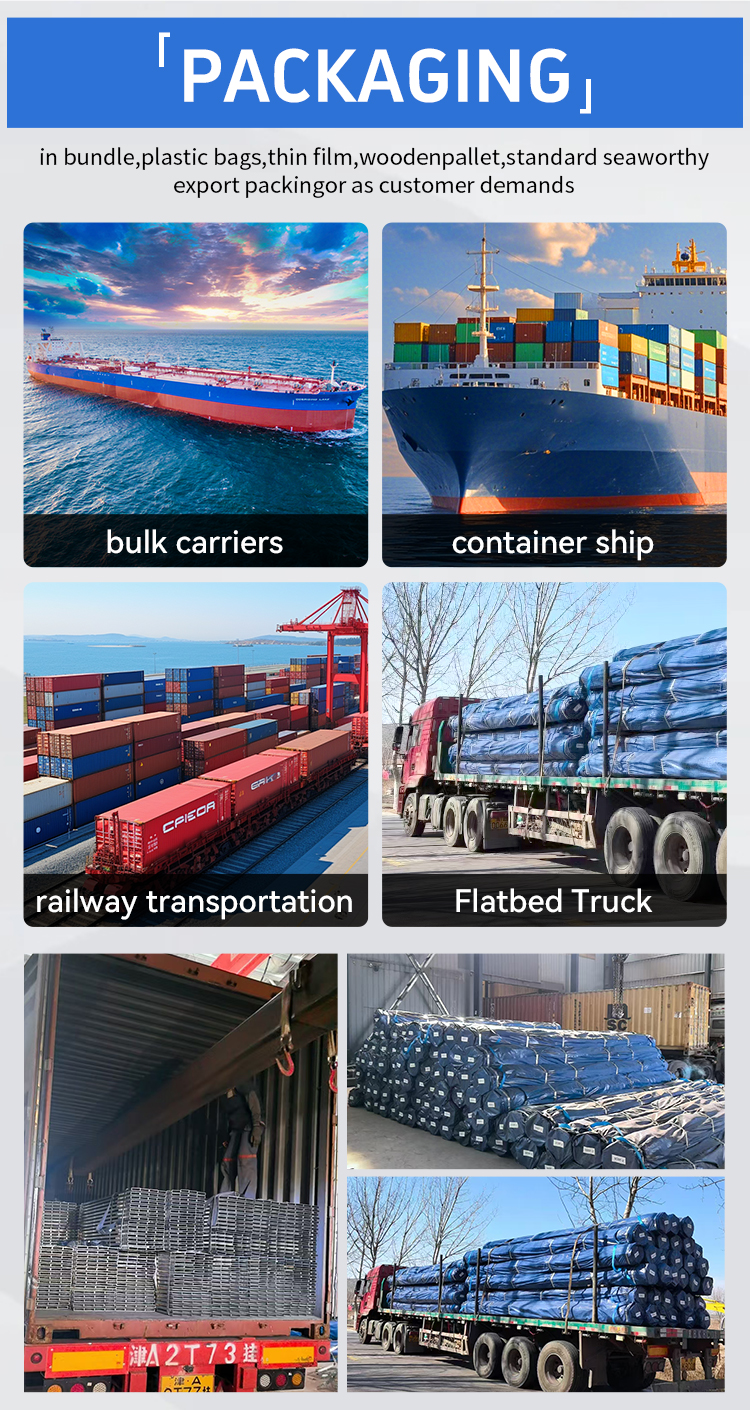
Small sizes: Wooden case packing; Medium sizes: Packed by steel strips; Large sizes: Loose packing
|
|
Applications
|
High-pressure oil & gas transmission; Chemical pipelines; Boiler tubes; Mechanical manufacturing (shafts, cylinders, etc.)
|
|
Technical
|
Seamless (Hot-rolled/ Cold-drawn process)
|
|
Trade Term
|
EXW, FOB, FCA, CFR, CIF
|
|
Payment Term
|
T/T, L/C
|
|
Delivery Time
|
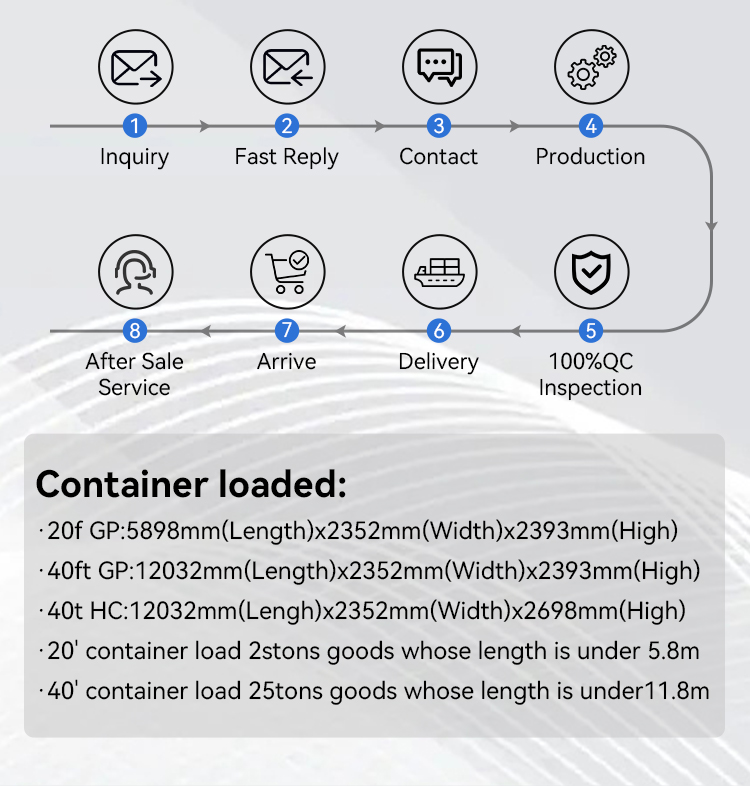
7-50 days after receiving advanced payment (based on quantity)
|
|
Main Market
|
Europe, North America, East Asia (core areas of industrial manufacturing)
|